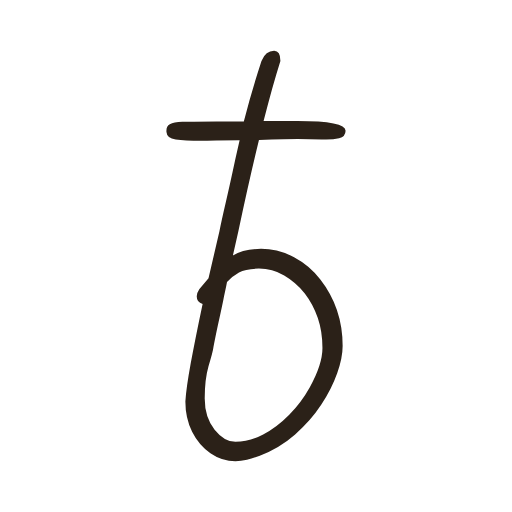
Ѣ, the Russian cursive letter yat
Ѣ, called yat, is the thirty-second letter of the old Cyrillic alphabet and one of the letters the reform of 1917 and 1918 removed from Russian. In a document written before that reform it appears in words that are spelled with е today.

History
Yat is the thirty-second letter of the old Cyrillic alphabet. A second version of it also existed, the iotated yat, written Ꙓ and ꙓ, a Cyrillic character combining a decimal I with a yat. That variant carried no numerical value, it was not part of the Glagolitic alphabet, and it was given the positions U+A652 and U+A653 in Unicode 5.1.
The letter was removed from Russian by the reform prepared by Aleksey Shakhmatov and implemented shortly after the Bolshevik revolution of November 1917, the proposals of 11 May 1917 from the assembly he headed forming the basis of the new rules. For yat the change was a conflation: ѣ was merged with е, so that дѣти became дети. In December 1917 the People's Commissariat of Education decreed that from 1 January 1918 all government and state publications were to be printed in the new style, and a decree of the Soviet of People's Commissars followed in October 1918. A common practice was the forced removal of the letters І, Ѳ and Ѣ from printing offices outright.
What the reform cut here were rules with no support in pronunciation. Ѣ and Е had become completely homophonous graphemes, and the old spelling required learning a long list of words written with yats, a list whose composition linguists disputed and on which spelling guides contradicted one another. The merger also created homographs that writing had previously kept apart, as есть and ѣсть, is and to eat, became one written word. The old orthography did not vanish at once: some academic printings appeared in it until 1929, and some émigré publications until the 1970s.
The hand in which the letter appears in handwritten documents is Russian cursive, developed during the 18th century on the base of skoropis, the 14th to 17th century chancery hand that descended from the earlier Cyrillic bookhands called ustav and poluustav, and established as the handwritten counterpart of the civil, or Petrine, printed script.