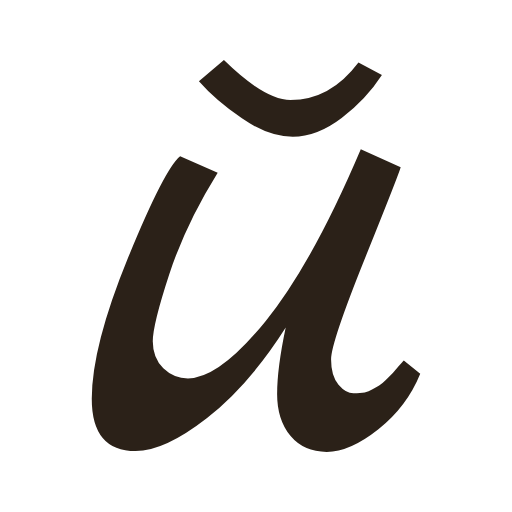
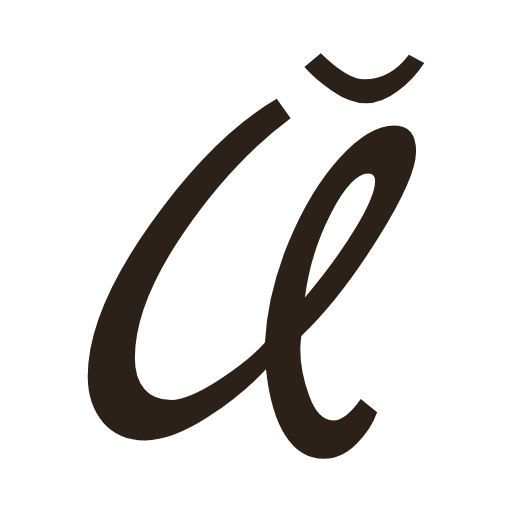
Й, the Russian cursive letter i-kratkoye
Й is the letter known in Russian as и краткое, short i: graphically the letter И with a breve, though modern languages treat it as a letter in its own right. It carries the palatal approximant /j/, the sound of y in yesterday.
In words
дорогой · dear
здравствуй · hello
History
Й is a letter of the Cyrillic script, known in Russian as и краткое, short i, and also called yot. Its article describes the letter as formed graphically from the Cyrillic letter И with a breve, while noting that modern languages generally treat it as an independent letter in its own right. The sound it carries is the palatal approximant /j/, the same sound as y in yesterday. Depending on the romanization system and the Slavic language in question, it is rendered y, j, i or ĭ.
That breve has a history of its own. When Peter I introduced his civil script type reform in 1708 and the printed Russian alphabet began to assume its modern shape, several letters were effectively eliminated and all diacritics and accents were dropped from secular usage, with the exception of й. The mark that distinguishes this letter from И is the one such mark the reform let stand.
Russian cursive, the handwritten form of the modern Russian alphabet, was developed during the 18th century on the base of the earlier Cyrillic tachygraphic writing known as skoropis, meaning rapid or running script, which in turn was the 14th to 17th century chancery hand of the earlier Cyrillic bookhands called ustav and poluustav. It became the handwritten counterpart of the civil, or Petrine, printed script of books, and modern Cyrillic italic typefaces are based, in their lowercase part, mostly on the cursive shapes of the letters.
The source on Russian cursive does not describe й itself. It does name и, the letter from which й is graphically formed, among six lowercase letters — и, л, м, ш, щ, ы — that consist, entirely or in part, of one element identical to the dotless Latin cursive letter ı, with the result that certain combinations of them cannot be unambiguously deciphered without knowing the language or without broader context.