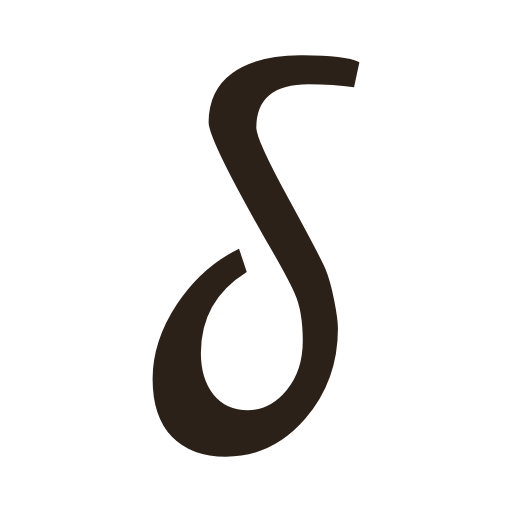
Б, the Russian cursive letter be
Б, named be, is the second letter of the Russian alphabet and carries the sound of b in ball. The letter shaped like a Latin capital B is not this one but its neighbour В, which carries a different sound.
In words
брат · brother
бабушка · grandmother
Easy to confuse with
Looks like В (Ve)
The letter shaped like a Latin capital B is В (Ve), not Б. Ve represents the voiced labiodental fricative /v/, or the voiced bilabial fricative /β/, while Б represents the voiced bilabial plosive /b/ and is the letter romanized with the Latin B. Put plainly: in a Russian document the capital that looks like B is the one that does not sound like B.

History
Б, named be, is a letter of the Cyrillic script and the second letter of the modern Russian alphabet. It commonly represents the voiced bilabial plosive /b/, the sound of b in the English word ball, and the letter is romanized using the Latin letter B.
The letter it must not be confused with is its neighbour Ve (В в). Ve is shaped like the Latin capital letter B but represents a different sound, the voiced labiodental fricative /v/ or the voiced bilabial fricative /β/. A capital in a Russian document with the shape of a Latin B is therefore Ve, not Be. There is a further caution for handwriting from beyond Russia: both б and Б are among the letters that can be written differently in Serbian and Macedonian cursive from the way they are written in Russian.
In Russian itself, a handwritten document will almost always be in Russian cursive, the handwritten form of the modern Cyrillic script used in place of the block letters of print. Russian cursive was developed during the 18th century on the base of skoropis, the earlier Cyrillic rapid or running script, which was in turn the 14th to 17th century chancery hand descended from the older Cyrillic bookhands called ustav and poluustav. It became the handwritten counterpart of the so-called civil, or Petrine, printed script of books.
In skoropis documents each scribe had his own handwriting and his own peculiarities in forming and grouping letters, and letter shapes vary depending on their neighbourhood, so an unclear place is best compared with parts of the same text that have already been read.