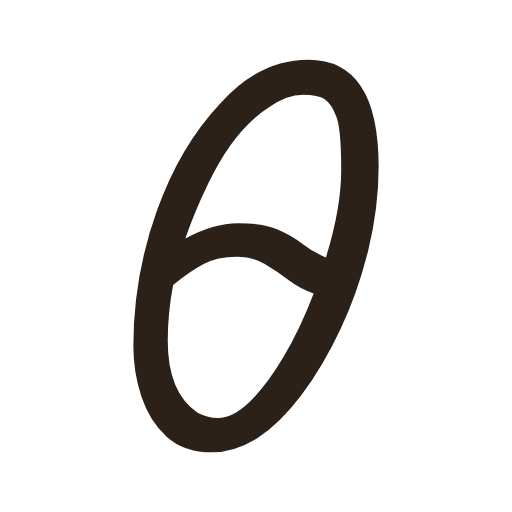
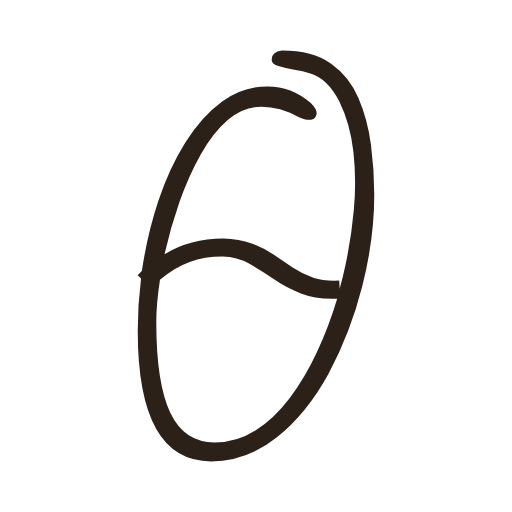
Ѳ, the Russian cursive letter fita
Ѳ is fita, whose shape and name come from the Greek letter theta. In Russian it was pronounced as f and appeared only in words of foreign, mostly Greek, origin, until the 1918 reform replaced it with ф.
History
Fita is a letter of the Early Cyrillic alphabet. Its shape and its name are both derived from the Greek letter theta, and in the Cyrillic numeral system it carries the value 9. In the ISO 9 romanization system it is rendered with an F and a grave accent.
Russian never had the voiceless dental fricative that theta represents in Greek, so ѳ was pronounced as f, and it was used only in foreign words, particularly Greek ones. Across the 18th and 19th centuries it was gradually lost in favour of ф or т. It remained more common than izhitsa, the other letter Russian had taken over from Greek, but it became quite rare as a Western, French-like pronunciation was adopted for many words: ѳеатръ, theatre, gave way to театръ.
Russian cursive, the handwritten form of the alphabet used for most personal letters and schoolwork, was developed during the 18th century on the base of skoropis, the rapid chancery hand of the 14th to 17th centuries, which had in turn come out of the earlier Cyrillic bookhands called ustav and poluustav. It became the handwritten counterpart of the civil, or Petrine, printed script of books, and the lowercase shapes of modern Cyrillic italic typefaces are based mostly on it.
The reform implemented shortly after the revolution of November 1917 settled the matter by conflating ѳ with ф, so that мараѳонъ became марафон. Seen from the side of the alphabet rather than of single words, the reform removed pairs of completely homophonous graphemes: Ѣ against Е, Ѳ against Ф, and the trio of И, І and Ѵ. That brought the alphabet closer to the actual phonological system of the language. The old letters lingered in odd corners even so. Russian and later Soviet railways ran locomotive series designated І, Ѵ and Ѳ, and despite the altered orthography those series names stayed unchanged until the locomotives were discontinued in the 1950s.