Э is the Cyrillic letter known as backwards e, standing for the vowels [e] and [ɛ] in Russian, Belarusian and West Polesian. It is the backwards version of the older Ukrainian Ye, Є, and should not be confused with it.
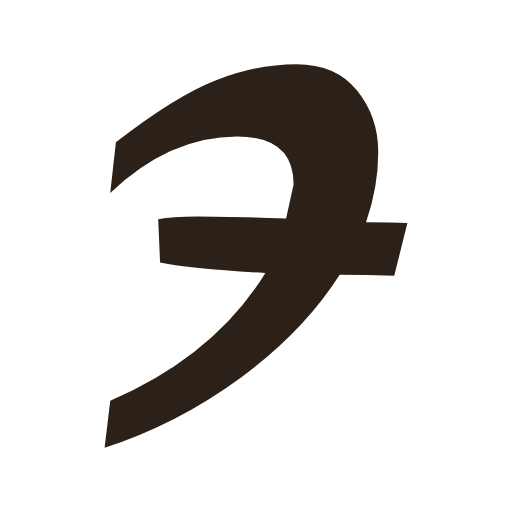
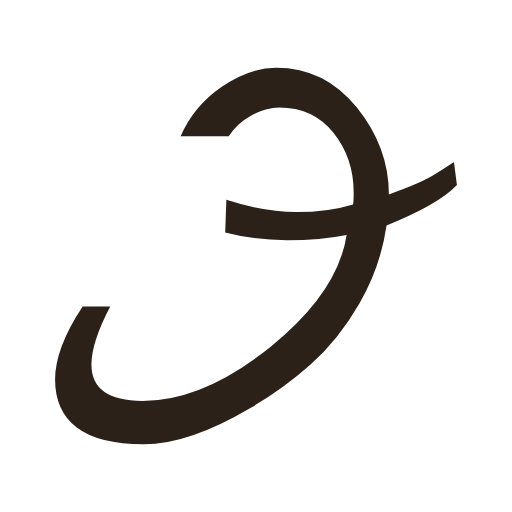
Looks like Є (Ukrainian Ye (Є є))
The source states plainly that Э closely resembles the older Cyrillic letter Ukrainian Ye and should not be confused with it. Э is the backwards version of Є, so the two face opposite ways. They also sit in different alphabets: Э is the letter of Russian, Belarusian and West Polesian, where it carries the vowels [e] and [ɛ].
- Printed
- Э э
- Name
- э (e)
- Transliteration
- e
- IPA
- /e/, /ɛ/
- Position
- 31 of 33
History
Э is the Cyrillic letter known as backwards e, in Russian э оборотное, e oborotnoye. It is found in three Slavic languages, Russian, Belarusian and West Polesian, and it represents the vowels [e] and [ɛ], the sound of the e in the English word editor. In the other Slavic languages that use the Cyrillic script those sounds are represented by Ye, Е е, which in Russian and Belarusian stands for [je] in initial and postvocalic position, or for [e] with palatalization of the preceding consonant. Э closely resembles the older Cyrillic letter Ukrainian Ye, Є є, and should not be confused with it, being the backwards version of that letter. Beyond the Slavic languages, Cyrillic Moldovan, which was used in the Moldovan SSR during the Soviet Union and is still used in Transnistria, gives Э the value of ă in the Latin Romanian alphabet, the phoneme [ə]. The letter is also used in the Cyrillic alphabets of Mongolian and of many Uralic, Caucasian and Turkic languages of the former Soviet Union.
The cursive sources name the handwritten forms that cause trouble, and Э is not among them. The ambiguity they describe belongs to the element shared by и, л, м, ш, щ and ы, to the lowercase п that may coincide with Latin cursive n despite the completely different sound value, and to the т that resembles Latin m. Nothing specific is recorded there about the handwritten shape of Э.
Russian cursive was developed during the 18th century on the base of skoropis, the rapid or running script that was the 14th to 17th century chancery hand of the earlier Cyrillic bookhands called ustav and poluustav, and it became the handwritten counterpart of the civil, or Petrine, printed script of books. Skoropis itself, which grew out of semi-ustav in the second half of the 14th century for office and private office work, is characterised by a pronounced calligraphic character, by roundness of letters and smoothness in writing them, and by many ligatures and abbreviations. Because each scribe had his own hand, reading such a document correctly depends on comparing an unclear passage with parts of the same text already read.
Keep going
Print a practice sheet for э
The history of Russian cursive
1708 — present
All 37 letters
The whole alphabet on one page
Have a document with this letter in it? Upload a photo and we will read the whole page.
Upload a document