Ы is the Cyrillic letter Yeru, the vowel /ɨ/ that follows hard consonants in Russian and Belarusian. In cursive it is one of six lowercase letters built from a single shared element, a group the sources name as a real source of ambiguity.

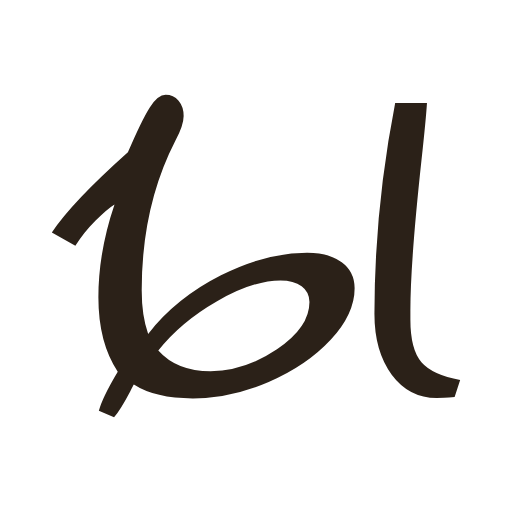
Looks like и (Cyrillic и)
Both letters are built from the element that the cursive sources name as shared by и, л, м, ш, щ and ы, and combinations of these letters cannot be deciphered unambiguously without knowing the language or without a broader context. The sources give no shape test, only context: read the whole word, then compare the doubtful place with parts of the same document you have already read. The worked example offered is волшебник against домик, where the pairs лш and ми are written identically.
- Printed
- Ы ы
- Name
- ы (y)
- Transliteration
- y
- IPA
- /ɨ/
- Position
- 29 of 33
History
Ы is the Cyrillic letter Yeru, also called Eru, and in modern Russian it is usually named simply Y. Historically, and in modern Church Slavonic, it is called Yery or Ery. It stands for the close central unrounded vowel written /ɨ/, described as more rear or upper than i, and in the Russian and Belarusian alphabets it comes after non-palatalised, that is hard, consonants. It is normally romanised as y, which is why the family name Крылов is written Krylov in English and in most other West European languages. That spelling matches the Latin alphabet used for Polish, whose y represents the same sound, and the traffic runs both ways: in the cyrillisation of Polish, ы does duty for y, so Maryla appears as Марыля. One caution for anyone working back from a Latin transcription is that y also renders other Russian letters, on its own for й and inside digraphs such as ya for я. Outside Russian the letter is put to other uses, standing for /ɤ/ in Rusyn and for /ɯ/ in most Turkic languages written in Cyrillic, among them Kazakh and Kyrgyz.
In handwriting this letter belongs to a small group that the cursive sources single out by name. Several lowercase cursive letters consist, entirely or in part, of one element that is identical to the dotless Latin cursive ı, to the cursive Greek ι, or to half of a cursive u, and those letters are и, л, м, ш, щ and ы. Certain combinations of them cannot be deciphered unambiguously without knowing the language or without a broader context. In волшебник, meaning magician, and домик, meaning little house, the pairs лш and ми are written identically, and лишишь, meaning you will deprive, consists almost exclusively of these elements.
Russian cursive was developed during the 18th century on the base of skoropis, the rapid or running script that was the 14th to 17th century chancery hand of the earlier Cyrillic bookhands called ustav and poluustav, and it became the handwritten counterpart of the civil, or Petrine, printed script of books. Skoropis was never uniform: each scribe had his own handwriting and his own peculiarities in forming and grouping letters, so correct reading depends on comparing an unclear place against parts of the same text that have already been read.
Keep going
Print a practice sheet for ы
The history of Russian cursive
1708 — present
All 37 letters
The whole alphabet on one page
Have a document with this letter in it? Upload a photo and we will read the whole page.
Upload a document