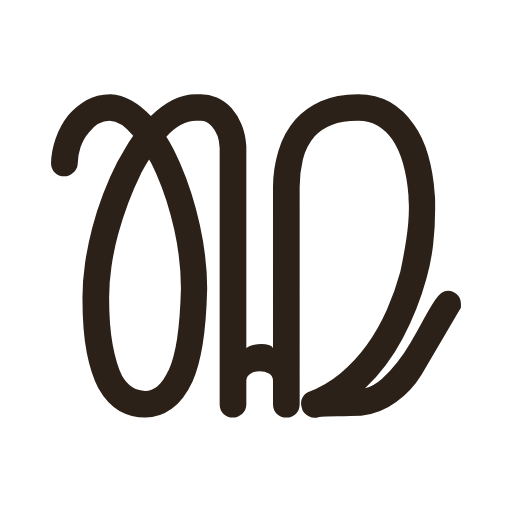
W, the Sütterlin letter w
W is the 23rd letter of the German alphabet, representing a voiced labiodental fricative /v/, corresponding to the consonant sound of English 'v' and found throughout native Germanic vocabulary. In Sütterlinschrift, it was redesigned in 1911 by Ludwig Sütterlin with upright, geometric proportions for German schoolchildren.
In words
Schwester · sister
zwei · two
Weihnachten · Christmas

History
The letter W is the 23rd letter of the German alphabet. Phonetically, it represents a voiced labiodental fricative /v/, corresponding to the consonant sound of English 'v' and found throughout native Germanic vocabulary.
Sütterlin lowercase w consists of two rounded upright basins followed by a small loop on the right shoulder. Capital W features two upright rounded troughs drawn in clean, rhythmic succession.
The letter w appears extensively in family documents: 'Witwe' (widow), 'Wohnort' (residence), 'Woche' (week), and 'Wasser' (water). Its multiple basins make it a prominent presence in cursive texts.
W shares most of its history with U and V.[1] When Latin script began to be used for Germanic languages toward the end of the first millennium, V already seemed unsuited to their w sound, so the ligature VV or UU was created, from which W developed.[2] The English name, double u, still shows that origin.[3] The German w was at first a non-syllabic u, much like English w today.[4]
Sources
- [1] W — Wikipedia (German) — shared history (accessed 2026-10-14)
- [2] W — Wikipedia (German) — the VV/UU ligature (accessed 2026-10-14)
- [3] W — Wikipedia (German) — the English name double u (accessed 2026-10-14)
- [4] W — Wikipedia (German) — German w was a non-syllabic u (accessed 2026-10-14)