S, the Sütterlin letter s
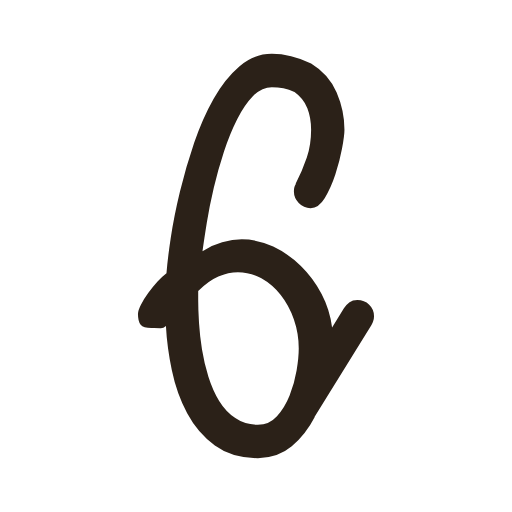
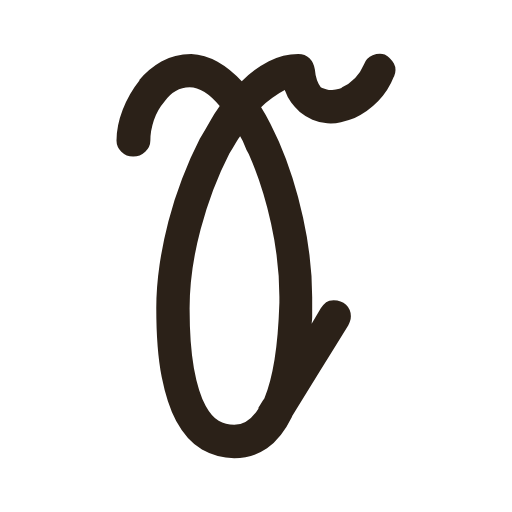
S is the 19th letter of the German alphabet, representing a sibilant fricative, pronounced voiced /z/ in syllable onsets before vowels and voiceless /s/ in codas and clusters. In Sütterlinschrift, it was redesigned in 1911 by Ludwig Sütterlin with upright, geometric proportions for German schoolchildren.
In words
Sonntag · Sunday
Schwester · sister
Haus · house
History
The letter S is the 19th letter of the German alphabet. Phonetically, it represents a sibilant fricative, pronounced voiced /z/ in syllable onsets before vowels and voiceless /s/ in codas and clusters.
Sütterlin retained the obligatory orthographic distinction between long s and round s: long s is an upright vertical line with an upper loop, while round s is a small rounded oval with an interior tie. Capital S is an upright, balanced S-curve spanning the upper two zones.
The dual-s rule was mandatory in German orthography until the abolition of Kurrent and Sütterlin in 1941. In compound words, a round s at the end of a morpheme ('Wachstube' from Wach-Stube vs 'Wachstube' from Wachs-Tube) resolved ambiguities that modern Latin print cannot distinguish.
S began as a Proto-Sinaitic bow.[1] Greek had no sh sound,[2] so the Greeks changed the letter's value to s and turned it through 90 degrees.[3] The Sütterlin ß still lets one guess that it grew from long s and z.[4]
Sources
- [1] S — Wikipedia (German) — a bow (accessed 2026-10-14)
- [2] S — Wikipedia (German) — Greek lacked sh (accessed 2026-10-14)
- [3] S — Wikipedia (German) — value s, turned 90 degrees (accessed 2026-10-14)
- [4] Sütterlinschrift — Wikipedia (German) — ß from long s and z (accessed 2026-10-14)