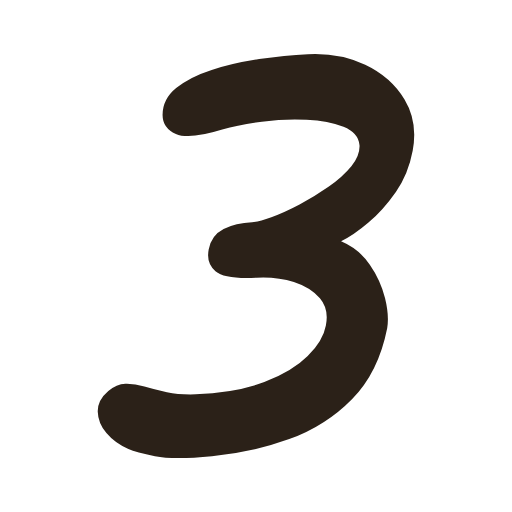
צ, the Hebrew cursive letter tsadi
צ (tsadi) is the 18th letter of the Hebrew alphabet, representing the voiceless alveolar affricate /t͡s/; at word end, it takes the elongated final form ץ (tsadi sofit).
In words
צדקה · charity
Easy to confuse with
Looks like ד (dalet (ד))
The cursive tsadi is a tall letter that rises above the line; the dalet stays within it.
History
צ is the 18th letter of the Hebrew alphabet and has a numerical value of 90. In traditional and modern Hebrew and Yiddish, it represents the voiceless alveolar affricate /t͡s/; at word end, it takes the elongated final form ץ (tsadi sofit).
In cursive script, tsadi is written with a diagonal base and a rightward loop or prong. Final tsadi (ץ) drops straight down in a dramatic vertical descent below the baseline.
Tsadi occurs in religious formulas like "tsaddik" (righteous person) and numerical dating (value ninety), with its cursive stroke requiring care to avoid confusion with ayin or tet.
The letter is also called tsadik, influenced by its Yiddish name, tsadek.[1] Its final form represents 900, but this is rarely used; taw, taw and qof, 400 + 400 + 100, are written instead.[2] As an abbreviation it stands for ṣafon, north,[3] and it is one of the seven letters that receive crowns, tagin, in a Torah scroll.[4] With a geresh it writes the ch of chips,[5] and Sephardi Hebrew pronounces it like a regular s.[6]
Sources
- [1] Tsade — Wikipedia — tsadik, from Yiddish tsadek (accessed 2026-10-14)
- [2] Tsade — Wikipedia — final tsadi 900, rarely used (accessed 2026-10-14)
- [3] Tsade — Wikipedia — ṣafon, north (accessed 2026-10-14)
- [4] Tsade — Wikipedia — crowned in a Torah scroll (accessed 2026-10-14)
- [5] Tsade — Wikipedia — צ׳ for ch (accessed 2026-10-14)
- [6] Tsade — Wikipedia — Sephardi s (accessed 2026-10-14)