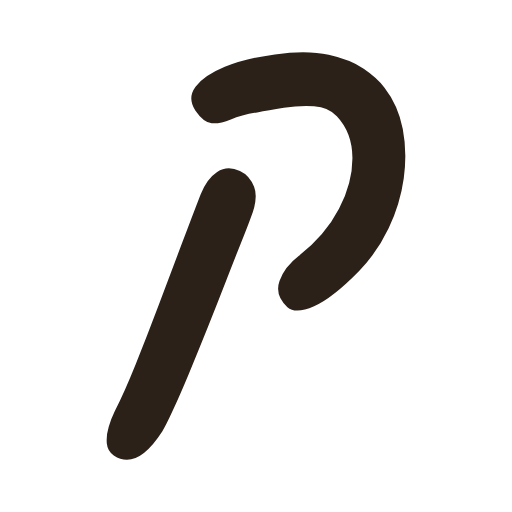
ק, the Hebrew cursive letter qof
ק (qof) is the 19th letter of the Hebrew alphabet, representing the voiceless velar plosive /k/, historically the voiceless uvular plosive /q/.
In words
זקן · old man
צדקה · charity
קהילה · community
History
ק is the 19th letter of the Hebrew alphabet and has a numerical value of 100. In traditional and modern Hebrew and Yiddish, it represents the voiceless velar plosive /k/, historically the voiceless uvular plosive /q/.
Cursive qof features a rounded arch or loop accompanied by a separate descending left leg that plunges below the baseline, closely preserving the fundamental two-element structure of its printed counterpart.
Qof appears extensively in family correspondence in terms of relationship (such as "qarov", relative) and holiness ("qadosh"), as well as representing one hundred in numerical notation.
Qof may first have pictured a sewing needle, specifically the eye of a needle, or the back of the head and neck;[1] an older suggestion is a monkey and its tail, and in Hebrew qof means monkey.[2] It has merged in sound with kaf, /k/, in Israeli, Ashkenazi and Sephardic Hebrew.[3] Its name is often written Kuf, especially by Ashkenazi Jews, from the Yiddish name of the letter,[4] and Yemenite Jews pronounce it as a g.[5]
Sources
- [1] Qoph — Wikipedia — eye of a needle, or nape (accessed 2026-10-14)
- [2] Qoph — Wikipedia — a monkey (accessed 2026-10-14)
- [3] Qoph — Wikipedia — merged with /k/ (accessed 2026-10-14)
- [4] Qoph — Wikipedia — Kuf (accessed 2026-10-14)
- [5] Qoph — Wikipedia — Yemenite [g] (accessed 2026-10-14)