Translate an old Russian letter into German or English
Historical Russian family letters, including correspondence from Germans in Russia, preserve pre-1918 orthography and personal cursive. Photograph the letter. FamilyLore transcribes the pre-1918 or Soviet cursive, translates into English or German, and highlights uncertain words.
Your first three pages need no account and no card.
An imperial-era letter from our shelf, as read
A dotted underline marks a word FamilyLore was unsure of; [?] is its own note on a doubtful reading.
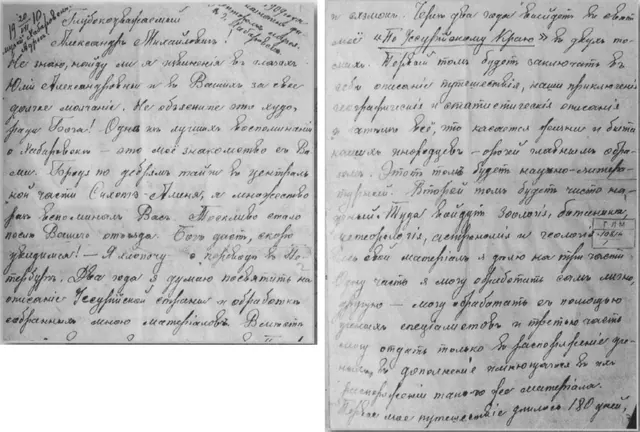
V. K. Arsenyev to A. M. Ivanov · 20 Jul / 2 Aug 1910
- Глубокоуважаемый
- Александръ Михайловичъ!
- Не знаю, найду ли я извиненія въ глазахъ
- Юліи Александровны и въ Вашихъ за свое
- долгое молчаніе. Не объясните это худо,
- ради Бога! Одно изъ лучшихъ воспоминаній
- о Хабаровскѣ — это мое знакомство съ Ва-
Also on the shelf: WWII Soviet family letter from the front, 1943 · 1792 imperial property document by Collegiate Assessor Lapatin
How well it reads, measured
| Script | Pages | Characters read correctly | Names, dates and numbers right | Misread words it marked | Last run |
|---|---|---|---|---|---|
| Russian and Ukrainian7 pages · 3 Nov 2026 | 7 | 86%Characters read correctly | 69%Names, dates and numbers right | 80%Misread words it marked | 3 Nov 2026 |
Measured on letters whose holders published a transcription made by hand, read the same way your page is. The figures rest on a few pages so far and move as pages are added. How well FamilyLore reads
Questions
- Can’t ChatGPT do this?
- A general chatbot can read some pre-1918 Russian cursive, sometimes well, but it usually hands you clean text with no sign of which words it guessed, and its makers publish no figures for this script; FamilyLore marks the words it is unsure of and publishes how often it reads correctly, in the table above.
- What if it reads a word wrong?
- Tap a word to see the other readings FamilyLore weighed, and correct it if you know better. The translation is redone from your correction. Most misread words carry a mark, but not every one, so a name or a date that matters is worth checking against the photo.
- Can FamilyLore translate Russian letters directly into German?
- Yes. While the default translation is English, you can select German as the target translation language on the upload screen. This is especially helpful for Russlanddeutsche genealogy.
- Who sees my pages?
- Only you. A page becomes public only if you share it, and then only to people who have the link. Deleting your account deletes the photos you uploaded.
What FamilyLore doesn’t read well yet
- Skoropis before 1750, and cursive with heavy superscript abbreviations (unmeasured).
- Official tabular tax registers and military revision lists set out in columns.
- Ukrainian texts with regional dialect expressions not in standard historical lexicons.
From photo to text in three steps
Take a photo of the page
Lay the sheet flat, in daylight and without flash. A phone photo of the whole page is enough.
Upload it
“Russian or Ukrainian, Before 1918” is already chosen.
Read it
You get the page as it was written, in modern spelling, and in English. Correct a word you know better yourself.
Rather read it yourself?