A letter, read and drawn
FamilyLore read this handwritten Russian page, translated it, and drew four moments from it in the manner of the illustrators of its time. This is the card it made, as it prints.
Black Sea coast · one summer · c. 1970s · inferred
«Плывешь как в аквариуме»
“You swim as if in an aquarium” — a seaside holiday letter recounting swimming, diving, and marine life
As written
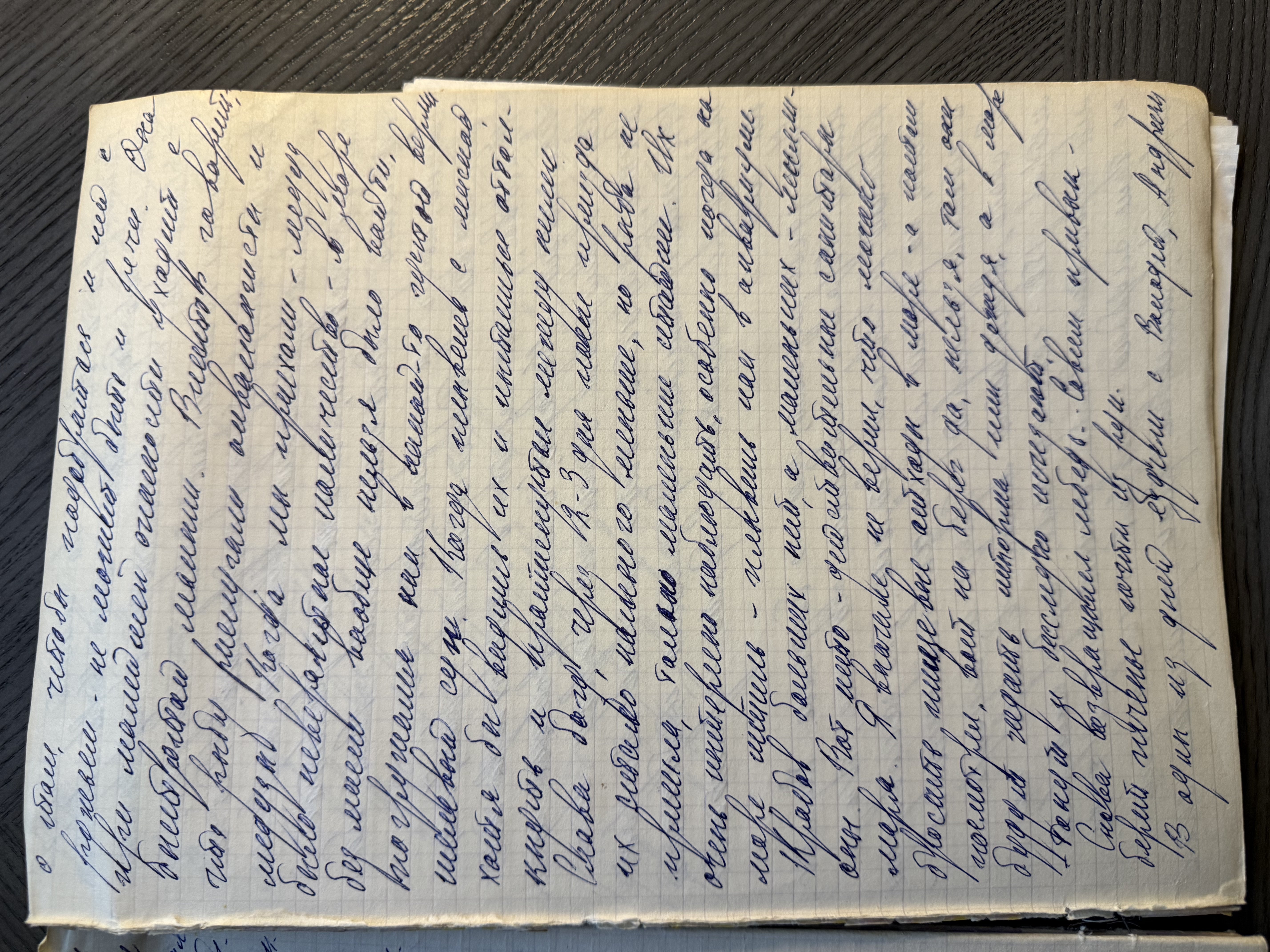
о сташ, чтобы подобраться к ней с рожьем - не может быть и речи. Она при малейшей опасности уходит с быстротой молнии. Виктор говорит, что рыбу распугали аквалангисты и медузы. Когда мы приехали - медуз было невероятное количество - в море без маски вообще нельзя было войти, погружашся как в какой-то густой взбол таный суп. Когда плывешь с маской хотя бы видишь их и пытаешься оттол кнуть и протиснуться между ними. Слава богу! через 12-3 дня после приезда их стало намного меньше, но рыба не пришла, только маленькие стайки. Их очень интересно наблюдать, особенно когда на море штиль - плывешь как в аквариуме. Крабов больших нет, а маленьких - тьма- они. Вот кто - действительно санитары моря. Я вначале не верил, что можно бросить пищу вне аквади в море - а потом посмотрел, вост на берег да, нельзя, там они будут гадать шторма или дождя, а в море тонут и бесследно исчезают. Снова возвращался лебедь. Совсем привык - берет печенье почти из рук. В один из дней ездили с Володей, Андреем
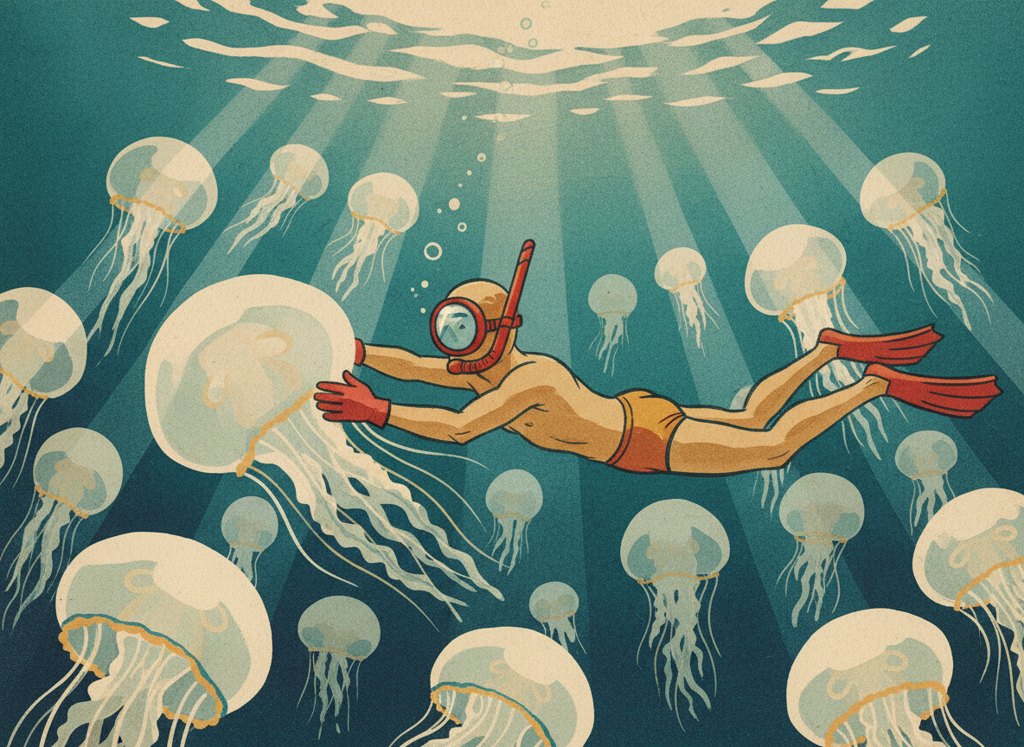
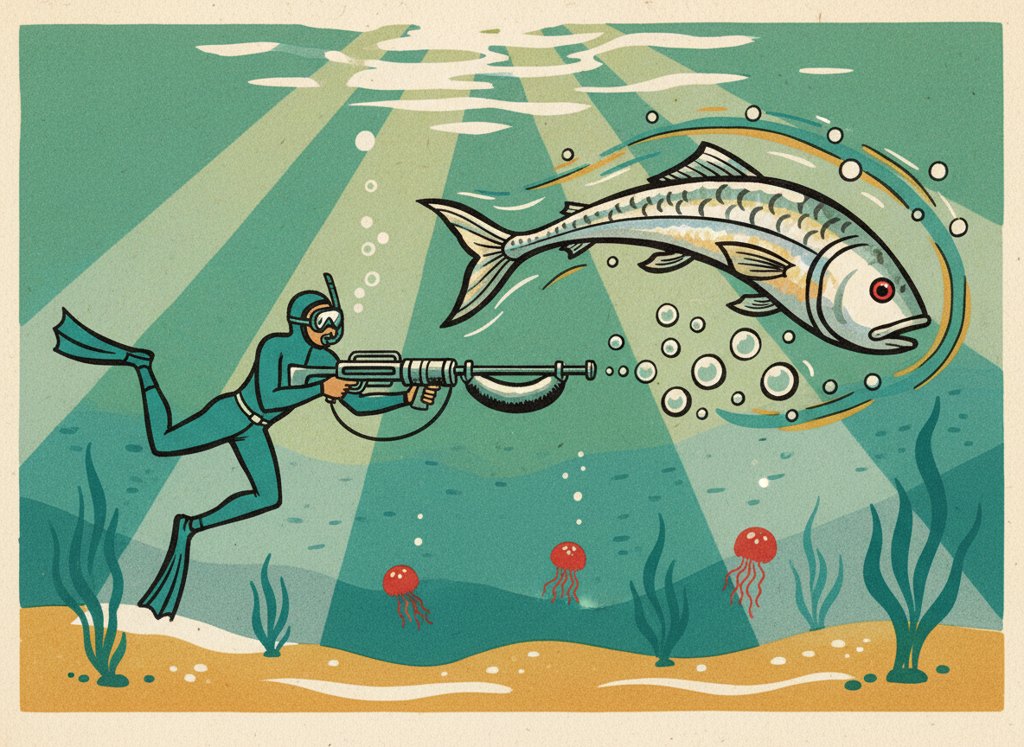
As for getting close to it with a spear gun, that's completely out of the question. At the slightest hint of danger, it darts away with lightning speed. Viktor says that scuba divers and jellyfish scared the fish away. When we arrived, there was an unbelievable number of jellyfish—you couldn't enter the sea without a mask at all; you'd plunge in as if into some thick, stirred-up soup. When you swim with a mask, at least you see them and try to push them away and squeeze between them.
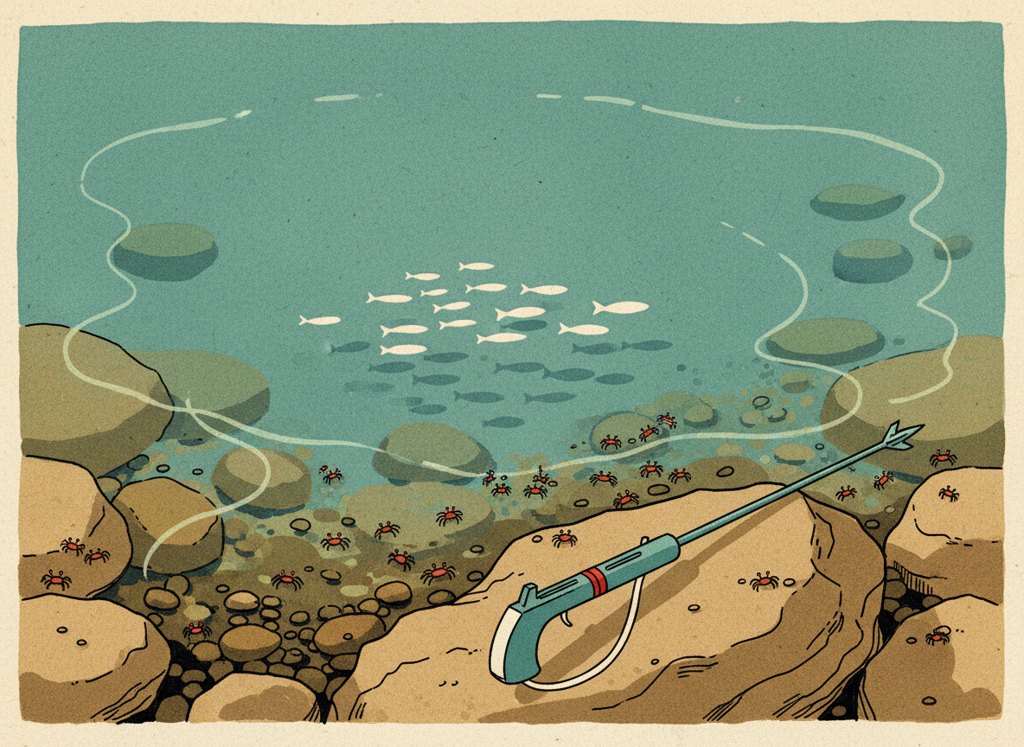
Thank goodness! Two or three days after arrival, there were much fewer of them, though the fish didn't return, only small schools. They are very interesting to watch, especially when the sea is calm—you swim as if in an aquarium. There are no large crabs, but small ones are everywhere—they are the real cleaners of the sea. At first I couldn't believe you could drop food into the sea—then I saw that on shore they would rot waiting for a storm or rain, but in the sea they sink and vanish without a trace.
The swan returned again. It has grown completely tame—it takes biscuits almost from our hands.
One day we drove out with Volodya and Andrei...
The letter, drawn

How we know Confidence · medium
The use of the word 'аквалангисты' (scuba divers) and references to recreational spearfishing ('с ружьем') indicate the post-WWII Soviet era, as the hobby became widely popular from the 1960s onward. · Describing the water as a 'thick soup' of jellyfish ('медузы') is a common phenomenon during the late summer months on the shores of the Black Sea and Sea of Azov. · The presence of standard Russian names like Viktor, Volodya, and Andrei confirms a Russian-speaking cultural context, likely Soviet citizens on vacation. · Phrases like 'When we arrived', 'Two or three days after arrival', and daily swimming activities strongly point to a summer vacation trip.